India has over 500 million WhatsApp users, making it one of the most widely used communication platforms in the country.
As healthcare becomes increasingly digital, clinics and hospitals are turning to WhatsApp to improve patient communication, appointment management, and overall patient experience.
Why Traditional Communication Methods Fall Short
Many clinics still rely on phone calls and manual communication.
This often creates challenges such as:
- Busy phone lines
- Missed appointment requests
- High reception workload
- Patient frustration
- Lack of real-time updates
Modern patients expect faster and more convenient communication.
Why WhatsApp Works So Well in India
Unlike dedicated healthcare apps, WhatsApp is already installed and familiar to almost every smartphone user.
Patients do not need to download new software or learn a new system.
This dramatically increases adoption and engagement.
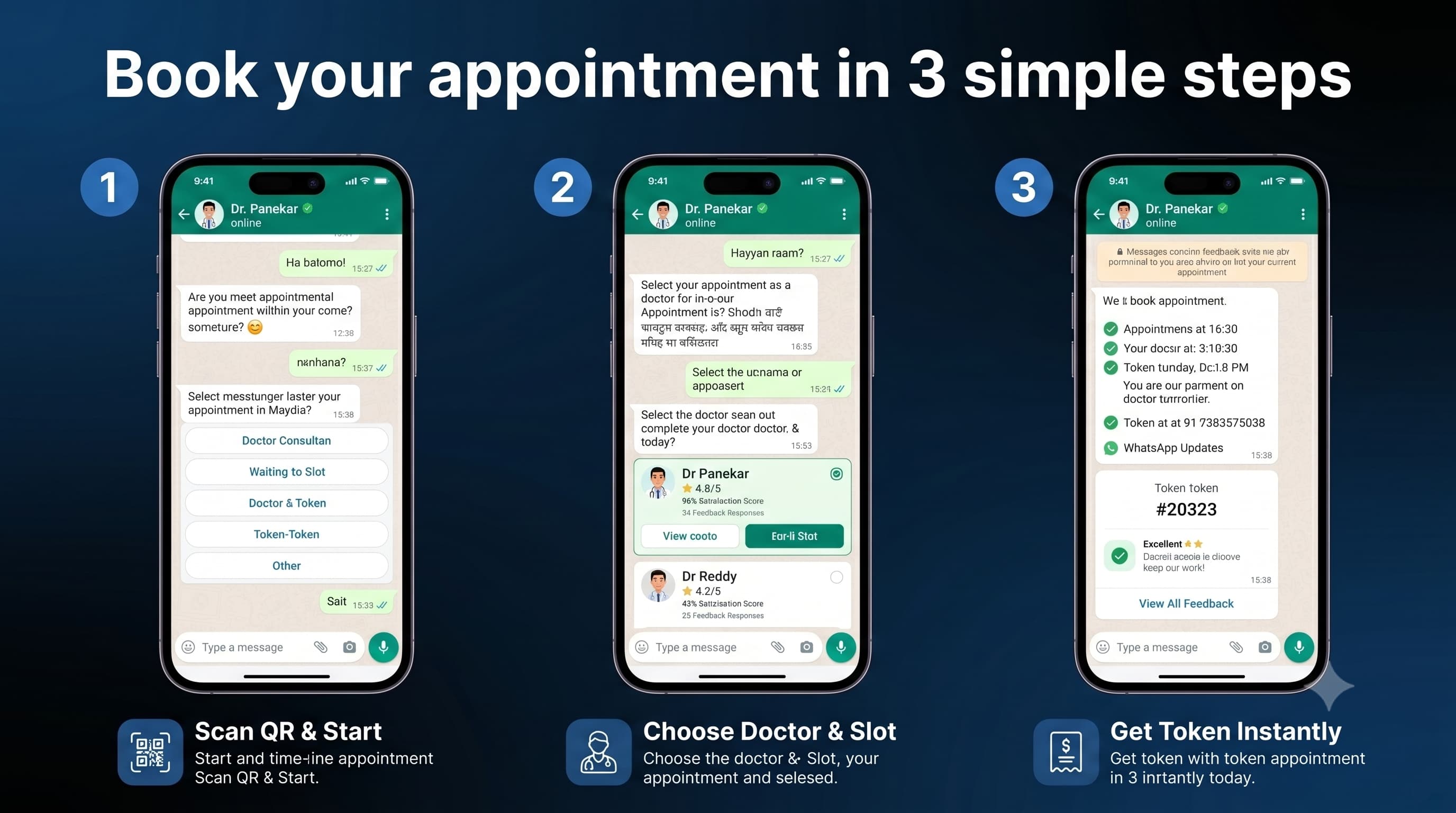
1. Appointment Booking Made Simple
Patients can book appointments directly through WhatsApp in just a few messages.
The process feels natural because patients are already comfortable using the platform every day.
2. Instant Digital Token Generation
Instead of waiting in long lines, patients receive a digital token immediately after booking.
This improves transparency and reduces uncertainty.
3. Live Queue Updates
Patients can check their queue status directly from WhatsApp.
This helps reduce crowded waiting rooms and unnecessary waiting.
4. Automated Appointment Reminders
Clinics can automatically send reminders before appointments.
This reduces no-shows and improves schedule utilization.
5. Multi-Language Patient Support
India is a multilingual country.
Patients are more comfortable communicating in their preferred language.
Modern healthcare communication platforms can support multiple Indian languages including:
- English
- Hindi
- Marathi
- Gujarati
- Bengali
- Tamil
- Telugu
- Kannada
This improves accessibility and patient satisfaction.
6. Feedback Collection After Consultation
Clinics can automatically request patient feedback after the visit.
This helps measure satisfaction and identify areas for improvement.
7. Reduced Reception Workload
Many routine interactions become automated.
Reception staff spend less time answering repetitive questions and more time helping patients.
Benefits for Patients
- Convenient appointment booking
- Real-time queue updates
- No additional apps required
- Communication in preferred language
- Faster responses
- Better overall experience
Benefits for Clinics and Hospitals
- Reduced administrative workload
- Higher patient satisfaction
- Fewer missed appointments
- Better patient engagement
- Improved operational efficiency
- Scalable communication system
How SarvaBook Uses WhatsApp
SarvaBook is built around WhatsApp-first patient communication.
Patients can:
- Book appointments
- Select doctors
- Receive digital tokens
- Track queue status
- Receive updates
- Submit feedback
The platform also supports communication in multiple Indian languages, making it accessible to patients across the country.
The Future of Patient Communication
Patients increasingly expect healthcare interactions to be as simple as ordering food or booking a cab.
WhatsApp provides a familiar, scalable, and highly effective channel for healthcare communication.
Clinics that adopt WhatsApp-based workflows today are better positioned to deliver modern patient experiences tomorrow.
Conclusion
WhatsApp is rapidly becoming the preferred communication channel for Indian healthcare providers.
From appointment booking and queue management to feedback collection and multilingual support, WhatsApp helps clinics deliver faster, smarter, and more patient-friendly services.