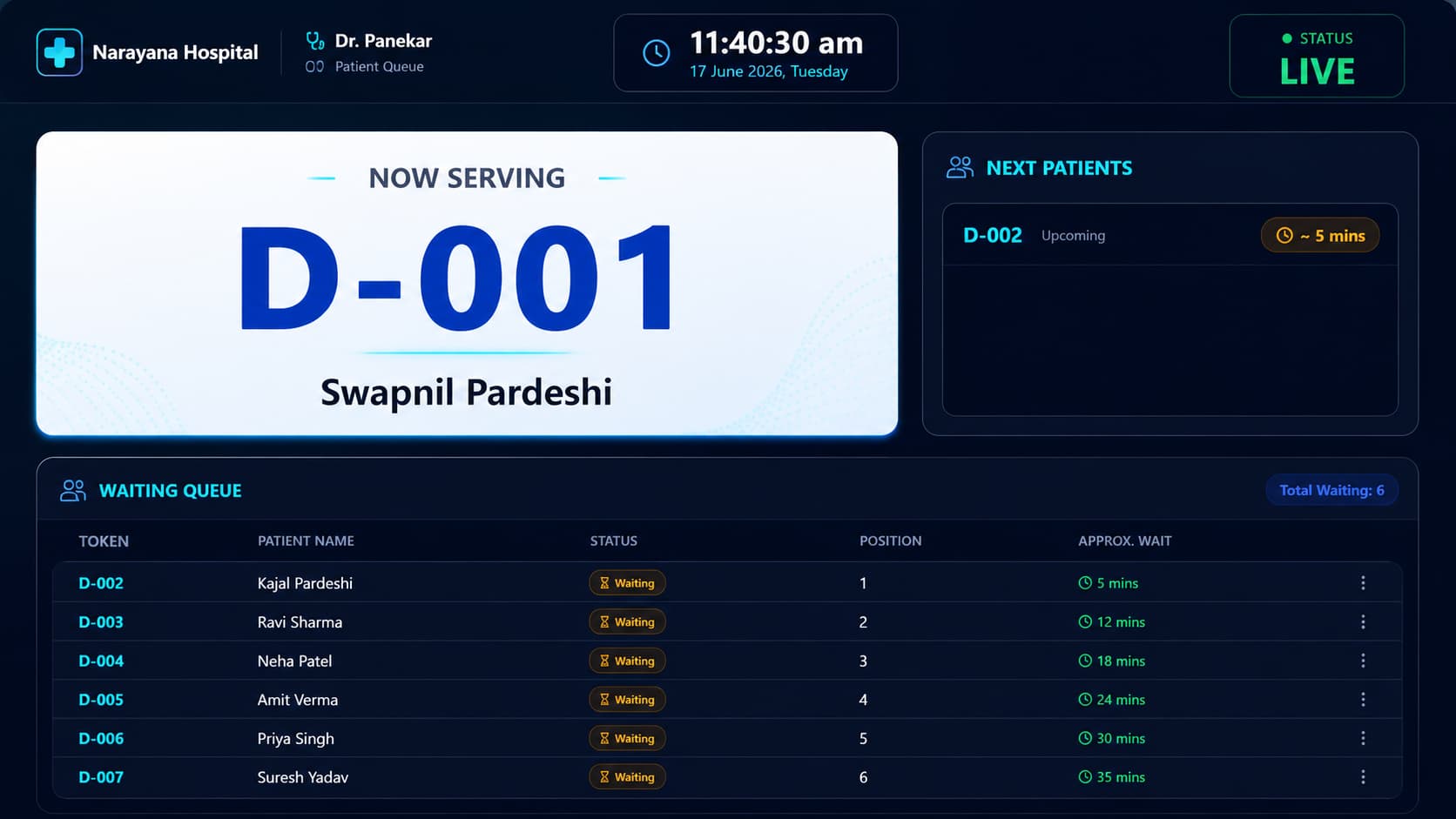
Long waiting times in Outpatient Departments (OPDs) remain one of the most common complaints in hospitals. Patients often spend more time waiting than they do consulting with a doctor, leading to frustration, lower satisfaction scores, and overcrowded waiting areas.
Fortunately, hospitals can significantly reduce OPD waiting times by improving scheduling, queue management, and communication processes.
Why OPD Waiting Time Matters
Patient experience begins long before the consultation. Excessive waiting can negatively affect patient perception, regardless of the quality of medical care provided.
- Reduced patient satisfaction
- Higher patient complaints
- Overcrowded waiting areas
- Increased stress for staff
- Lower operational efficiency
Common Causes of Long OPD Waiting Times
Many hospitals face delays due to operational bottlenecks rather than clinical issues.
- Walk-in patient overload
- Manual registration processes
- Inefficient appointment scheduling
- Lack of queue visibility
- Unbalanced doctor workloads
- Poor communication with patients
1. Implement Digital Appointment Booking
Allowing patients to book appointments online or through WhatsApp helps distribute patient arrivals throughout the day and reduces reception congestion.
Digital booking systems also eliminate many scheduling errors and reduce administrative workload.
2. Use a Digital Token System
Digital token systems provide patients with a queue number and live updates about their position.
Patients no longer need to stand near reception desks asking for updates, which creates a calmer and more organized environment.
3. Display Live Queue Information
Real-time queue displays improve transparency and reduce patient anxiety.
When patients know their expected waiting time, they are more willing to wait and less likely to complain.
4. Optimize Doctor Scheduling
Hospitals should analyze consultation patterns and allocate doctor availability based on patient demand.
Balanced scheduling helps prevent bottlenecks and improves overall patient flow.
5. Collect and Analyze Patient Feedback
Patients often identify operational issues before hospital management does.
Regular feedback helps hospitals understand where delays occur and which departments require improvement.
Technology's Role in Reducing OPD Waiting Time
Modern hospitals increasingly use digital solutions to streamline operations and improve patient experiences.
- WhatsApp appointment booking
- Digital token systems
- Live queue displays
- Automated notifications
- Patient feedback analytics
Together, these tools help hospitals serve more patients without increasing staff workload.
How SarvaBook Helps
SarvaBook provides hospitals and clinics with a complete patient flow management solution.
Patients can book appointments through WhatsApp, receive digital tokens, track live queue status, and provide feedback after their visit. Hospital administrators gain visibility into queue performance and patient satisfaction metrics.
Conclusion
Reducing OPD waiting time is not just about improving efficiency. It directly impacts patient satisfaction, hospital reputation, and staff productivity.
Hospitals that adopt digital scheduling and queue management systems are better positioned to deliver faster, more organized, and more patient-friendly healthcare services.