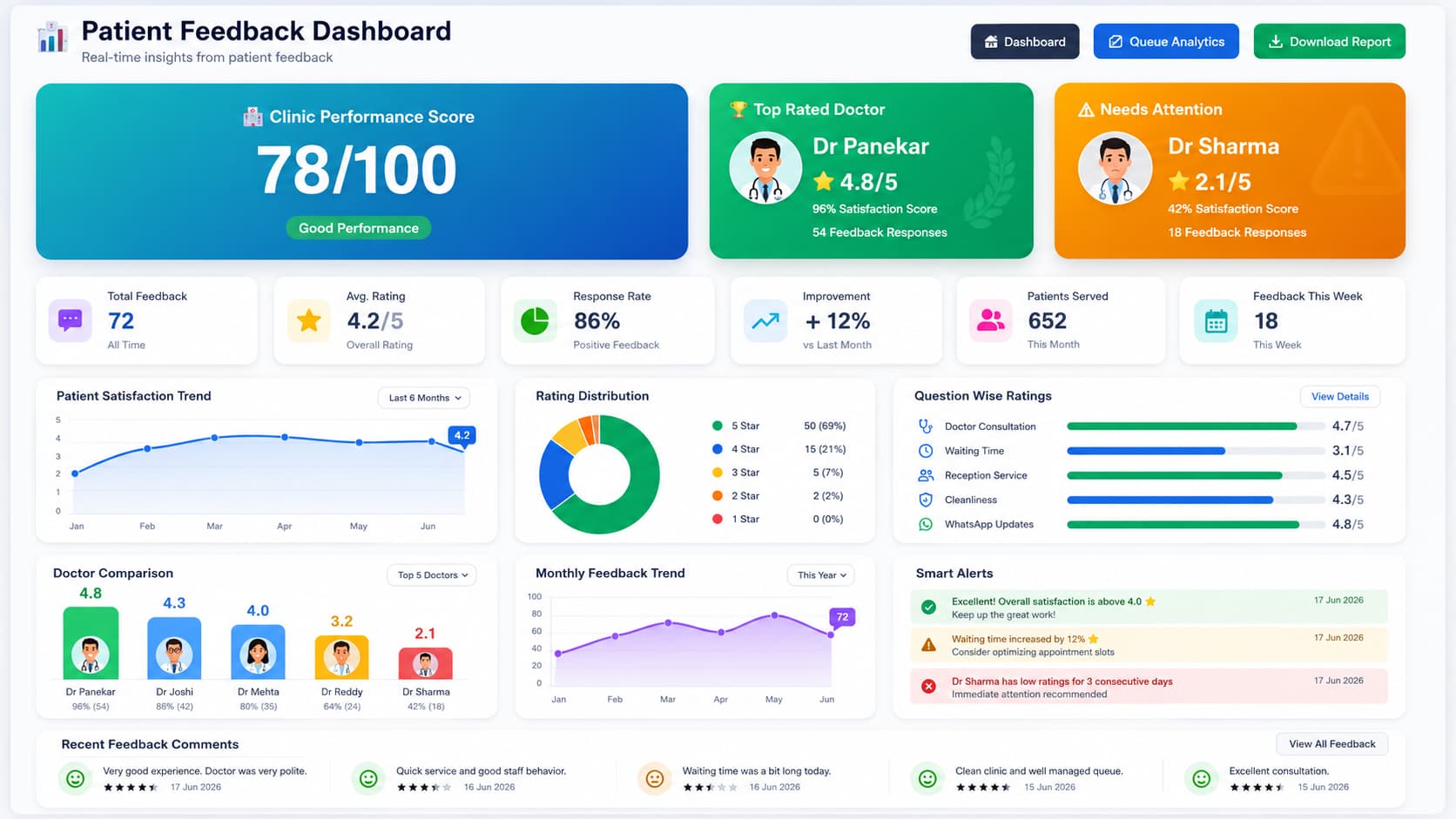
Patient feedback has become one of the most important indicators of healthcare quality. Modern hospitals are increasingly using digital feedback systems to understand patient experiences and continuously improve services.
Why Patient Feedback Matters
Patients interact with multiple departments during a hospital visit. Even when clinical treatment is excellent, long waiting times, poor communication, or administrative delays can negatively impact their overall experience.
- Measure patient satisfaction
- Identify service issues
- Improve hospital reputation
- Increase patient retention
- Support quality improvement initiatives
Challenges with Traditional Feedback Collection
Many hospitals still depend on paper feedback forms that patients rarely complete.
- Low response rates
- Manual data entry
- Difficult analysis
- Delayed reporting
- Lost feedback forms
Benefits of Digital Feedback Systems
1. Higher Response Rates
Patients are more likely to respond when feedback requests are sent directly to their mobile phones.
2. Real-Time Insights
Administrators can monitor satisfaction levels immediately rather than waiting for monthly reports.
3. Better Decision Making
Data-driven decisions help hospitals focus on the areas that matter most to patients.
4. Department-Level Analysis
Hospitals can evaluate feedback by department, doctor, or service category.
What Should Hospitals Measure?
- Doctor consultation experience
- Waiting time satisfaction
- Reception service quality
- Cleanliness and hygiene
- Staff behaviour
- Overall patient experience
How SarvaBook Helps
SarvaBook automatically sends WhatsApp feedback requests after patient visits. Responses are collected digitally and displayed through easy-to-understand dashboards and analytics reports.
Hospital administrators can quickly identify trends, monitor doctor ratings, and take corrective action when necessary.
Conclusion
Patient feedback is no longer optional for modern healthcare organizations. Digital feedback systems help hospitals improve service quality, strengthen patient relationships, and create better healthcare experiences.