Patient waiting time is one of the biggest factors affecting patient satisfaction in healthcare facilities. Even excellent medical care can be overshadowed by long and unpredictable waits.
Fortunately, clinics can significantly reduce waiting times through better scheduling, digital tools, and queue management.
Why Waiting Time Matters
Patients expect healthcare services to be efficient and organized. Excessive waiting often leads to:
- Patient frustration
- Negative reviews
- Missed appointments
- Overcrowded waiting rooms
- Reduced staff productivity
Reducing waiting time improves both patient experience and clinic operations.
Common Causes of Long Waiting Times
- Manual appointment scheduling
- Walk-in patient overload
- Lack of queue visibility
- Inefficient patient registration
- Unexpected consultation delays
- Poor communication with patients
1. Implement Digital Appointment Booking
Allow patients to book appointments online or through WhatsApp before arriving at the clinic.
This reduces reception workload and prevents excessive walk-ins.
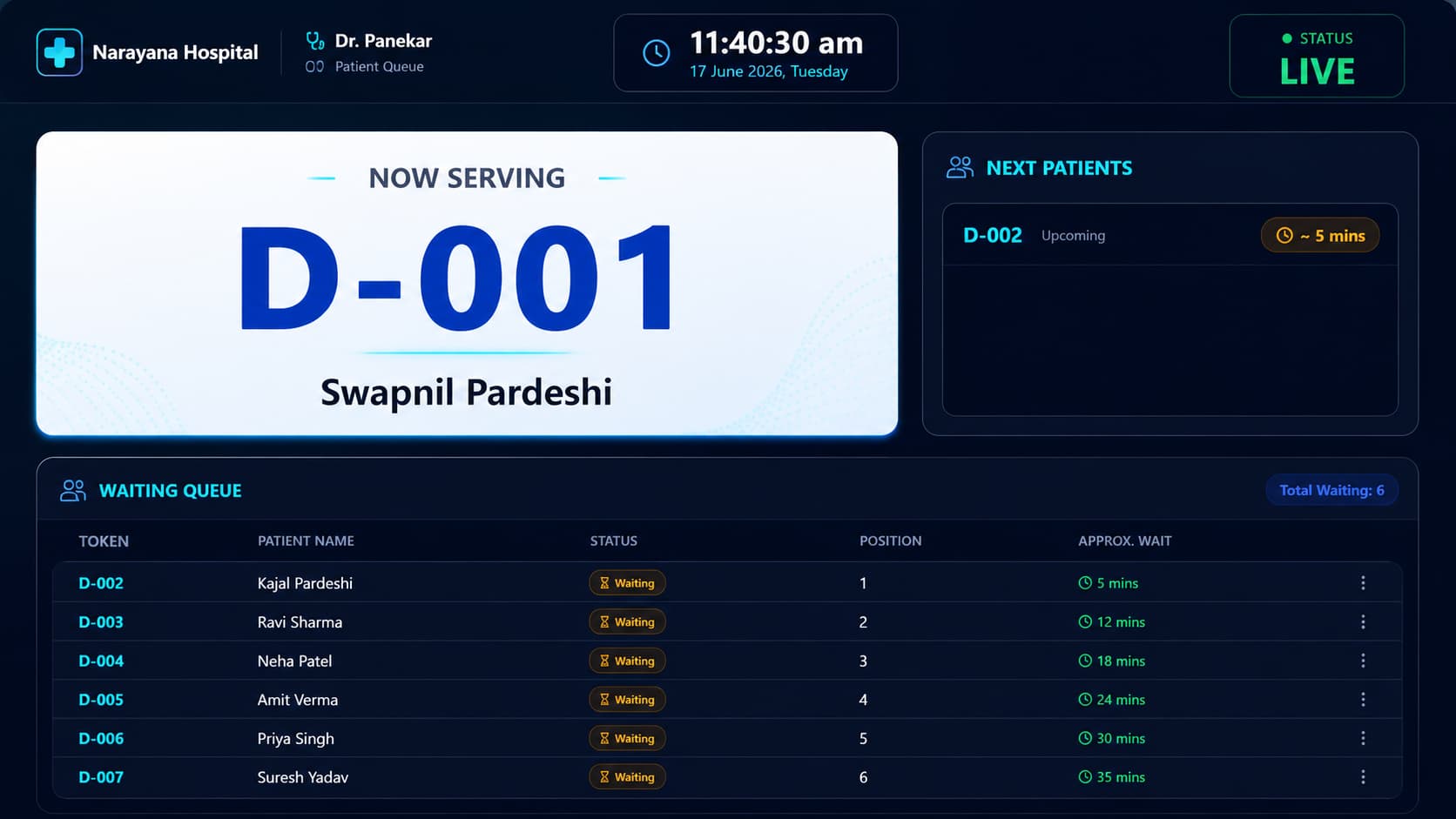
2. Use a Digital Token System
Digital token management helps organize patient flow and ensures patients are served fairly and efficiently.
Patients can see their queue position and estimated waiting time, which reduces uncertainty and frustration.
3. Display Live Queue Status
A live queue display screen keeps patients informed and prevents constant inquiries at the reception desk.
Transparency significantly improves the waiting experience.
4. Offer WhatsApp Queue Updates
Instead of sitting in crowded waiting rooms, patients can receive queue updates directly on WhatsApp.
They know exactly when their turn is approaching.
5. Optimize Doctor Scheduling
Analyze consultation patterns and create realistic appointment slots based on actual patient volumes.
This helps avoid overbooking and bottlenecks.
6. Reduce Manual Registration
QR code-based registration allows patients to enter information digitally before reaching the reception desk.
This speeds up check-in and reduces paperwork.
7. Track Waiting Time Analytics
The most successful clinics continuously measure waiting times.
Analytics help identify busy periods, staffing needs, and process improvements.
Technology's Role in Queue Management
Modern queue management systems combine appointment booking, digital tokens, live displays, and automated communication into one platform.
These tools help clinics serve more patients without increasing administrative workload.
How SarvaBook Helps Reduce Waiting Time
SarvaBook helps clinics streamline patient flow through:
- WhatsApp appointment booking
- Digital token generation
- Live queue displays
- Doctor scheduling tools
- Patient feedback collection
- Queue analytics and reporting
By automating routine processes, clinics can focus more on patient care and less on administration.
Conclusion
Reducing patient waiting time requires a combination of better processes and modern technology. Clinics that invest in digital queue management systems create a smoother patient experience, improve operational efficiency, and build stronger patient trust.